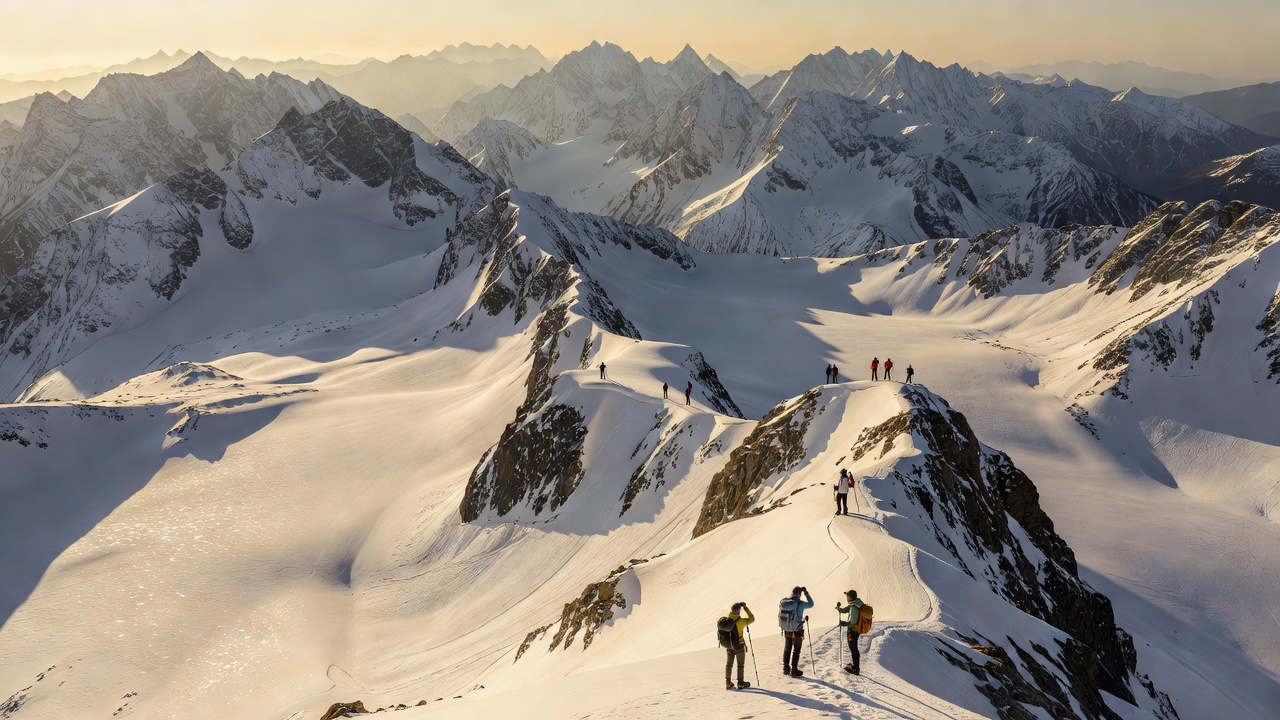
Begin with the experience you actually want
A sightseeing flight is primarily about perspective. It can reveal the relationship between a glacier, a valley and a high ridge in a way that a single viewpoint cannot. Its success need not depend on reaching one named summit. For many travelers, a well-judged circuit with a comfortable pace offers more than an ambitious itinerary with little room for changing conditions.
A transfer has a different measure of success: reaching an appropriate destination with a realistic onward plan. A landing visit adds another layer of permission, site assessment and passenger preparation. These products may use similar aircraft, but their constraints are not interchangeable. Ask the provider to explain exactly which service is being sold before comparing the price.
Distinguish private from unrestricted
A private flight generally means that your party has exclusive use of the booked aircraft or service. It does not mean that you can select any route, dictate the flight profile or land wherever you choose. Airspace restrictions, aircraft performance, weather and site permissions remain in force. The pilot retains operational authority regardless of the level of hospitality provided.
Shared sightseeing can be a sensible choice when your schedule is flexible and your main interest is the view. Understand whether departure depends on other passengers, how seating is allocated and what happens if the service does not proceed. Neither a private cabin nor a particular seat should be assumed from marketing photography. Ask for the actual arrangements in writing.
Match the region to your expectations
The Mont Blanc massif sits within a cross-border mountain setting, with Chamonix on the French side and Courmayeur on the Italian side. A journey associated with either town does not establish permission to cross a border, approach a protected area or land at altitude. The geographic name is the beginning of the planning conversation, not an itinerary in itself.
Around Zermatt, the Matterhorn dominates many travelers’ expectations, while the Jungfrau region offers a different relationship between valleys, villages and glaciated terrain. In the Dolomites, the visual character shifts toward pale rock towers and steep-sided groups. These are useful regional distinctions, but visibility and local rules still determine what can be offered on a particular day.
Valais, the Bernese Oberland and the Aosta Valley also differ in their ground connections. Choose a sensible departure base rather than adding a long road transfer solely to pursue a familiar mountain name. A less elaborate journey may leave more time to absorb the landscape and more flexibility when weather changes.
Compare the complete service
Ask what the quoted duration measures. Airborne time, time from engine start to shutdown and the overall excursion can be different things. Establish where you must report, how early you should arrive, whether a ground transfer is included and how long the complete activity is likely to occupy. Avoid tightly timed connections afterward.
Ask about cabin communication and the kind of commentary offered, without assuming that the pilot can provide a continuous guided talk. Safety and workload come first. Photographers should discuss equipment in advance: large bags, loose accessories and requests involving doors or windows cannot simply be accommodated on arrival. Never expect a special aircraft configuration from a photograph of a different service.
Passenger comfort also deserves a direct conversation. Explain mobility needs, motion sensitivity or concerns about confined spaces. Seat assignment may be affected by weight and balance, not only preference. An operator should tell you what information is needed and whether the proposed experience can reasonably accommodate you.
Choose on clarity, not spectacle alone
Request the operating company’s identity, the applicable commercial authorization and the cancellation terms. EASA provides a European regulatory reference, while Switzerland’s Federal Office of Civil Aviation and Italy’s ENAC provide national oversight information. These references help you frame questions; a logo or an editorial mention is not proof that a particular booking is authorized.
Finish with a simple test: would the experience still feel worthwhile if a named peak were obscured, the route shortened under agreed terms or the day moved? If the answer is no, choose a different plan or a more flexible travel window. A suitable alpine flight starts with expectations that can survive contact with the mountain environment.
Reference desk
Consult the relevant authority and the actual operator for current requirements. These are independent references, not partners or endorsements.